Login
Shopping cart
EnglishEnglish

All about down

Posted on 17-7-2024 by Sem
You come across down in many outdoor products. Think sleeping bags or winter jackets. But what exactly is down and why is it used in these products? In this blog, we dive into the world of down and look for answers to these questions. We also look at ethical issues facing the down industry.

What is down?

Down refers to the soft, fluffy underlayer of waterfowl (mostly ducks or geese) used as filling for jackets, sleeping bags and bedding products. It specifically involves the lower layer of skin covering. This layer consists of an almost invisible core to which many soft hairs are attached. Attached to these hairs are hundreds of tiny barbs that ensure that all downs are interwoven. This creates thousands of tiny air chambers that hold a large volume of warm air and form a barrier against the cold from outside, according to Wikipedia.

Down is known for its excellent warmth-to-weight ratio, making it a popular choice for products that need to retain heat and weigh as little as possible. On top of that, down is very compressible, making it very compact to carry. Looking at all these features, you can understand why down is a widely used material in the outdoor world.

Dons
Down is widely used in outdoor applications such as sleeping bags

The filling power of down

Down is excellent at holding a lot of air. We therefore say that down has a high airiness or loft. The higher the loft, the better the thermal insulation. The fill power of down says something about this loft and is measured in cuin. The values you come across there can be traced back to a measurement method using American measurements. This is because cuin is calculated from the space that 1 American ounce of down occupies in a cylindrical tube after a light weight is placed on the down for the duration of 1 minute. If the down then still occupies 700 cubic inches of space in this tube, it has a cuin of 700. 1 ounce of down that occupies 800 cubic inches of space after the test has a cuin of 800, and so on and so forth. The bottom line is this: higher cuin = higher fill power = higher loft and therefore better thermal insulation.

The fill weight

So fill power says a lot about the quality of the down, but it should definitely be combined with fill weight. The equally relevant fill weight is the total weight of down in the final product. A down jacket with a fill power of 850 cuin and a fill weight of 90 grams is not necessarily warmer than a box jacket with a fill power of 750 cuin and a fill weight of 175 grams. It is fair to say that down with a lower fill power requires a higher fill weight (and more space) to achieve the same amount of thermal insulation as down with a higher fill power. But actually comparing the level of thermal insulation is really only possible if the fill power of the products to be compared is the same.

The fill weight is also given in grams per m² by some brands. In principle, this method is more accurate than specifying the same fill weight for each size. However, this does make it more difficult to compare in some cases. Especially if you want to compare it with a brand that specifies the total weight as the fill weight.

Ratio down & feathers

For products with down filling, you often come across the term down to feather ratio. The meaning of this is not very exciting. The ratio purely indicates what percentage of the filling consists of down and what percentage consists of feathers. The higher the down percentage, the better the quality of the complete down package.

Duck and goose down

Almost all the down in jackets and sleeping bags comes from ducks or geese. Down can be obtained in two ways. On the one hand as a by-product of food production when ducks and geese are slaughtered. On the other by plucking these animals alive. However, the latter method is very animal-unfriendly and therefore highly controversial. All our brands state that they use "pluck-free" down, but more on that in the the ethical issues section.

Goose down generally has the highest fill power, as geese are usually bigger at the time of slaughter. Goose down also has just a bit more of a "premium" reputation than duck down, but that certainly does not mean it is always better. Within both types of down you will find big differences in quality. Therefore, always just pay attention to the fill power and fill weight of the product. Goose down with a cuin of 800 is of the same quality as duck down with the same cuin.

Constructions

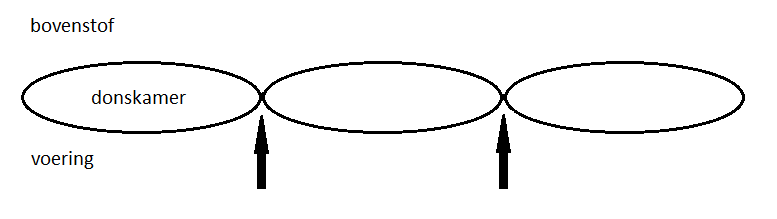
All the down in, say, a sleeping bag or a jacket is not just in one space. If this were the case, you would run the risk that the down is not nicely distributed, which could result in poorly insulating cold spots. This is why these types of products always have a multi-chamber construction. However, a distinction can be made on how these chambers are separated:

  • In quilted construction each room is stitched all the way through the fabric of a jacket. This type of construction is the lightest and most compressible, but it can create colder spots along the lines of the stitching. Some brands, such as Fjällräven, deal with these cold spots by placing two layers of this quilted construction on top of each other, with the cold spots of both layers not overlapping.
  • A so-called box-wall construction uses a partition of fabric between each chamber, meaning that each chamber is shaped like a box. This construction allows the down to fall better which improves thermal insulation, but the extra fabric required does add weight and also makes your jacket slightly less compressible. Also, products with this type of construction are more expensive as it is more labour-intensive to produce.
doorgestikte constructie
Side view of a quilted construction, with the arrows pointing to the stitching.
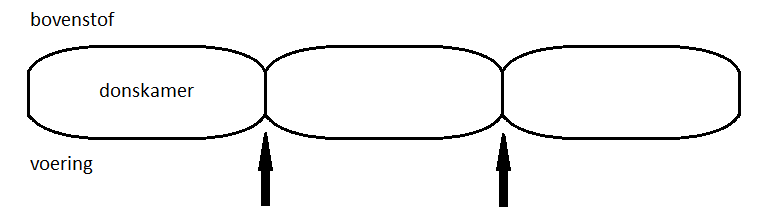
box-wall constructie
Side view of a box-wall construction, with the arrows pointing to the partitions.

The pros and cons of down

We have talked a lot about down by now, but why do we actually use down? Simply put, what are the major benefits of down?

Pros

Of all the filling materials to be used, down has the highest warmth-to-weight ratio. Per gramme, it can therefore offer more warmth than other filling materials such as polyester or wool. Down is also very compressible. That is, a down sleeping bag with exactly the same insulation performance as a synthetic one can be compressed into a much smaller unit than the synthetic sleeping bag. Incidentally, it is not recommended to store down in this compressed manner for long periods of time. Down also has an excellent repute when it comes to comfort. It feels nice and soft.

Cons

Down does unfortunately have an Achilles' heel. When exposed to moisture, down tends to absorb water. Thermal insulation then deteriorates very rapidly. However, there are now all kinds of innovations on the market that try to tackle this problem. For instance, the outer fabric of down jackets is often coated with a DWR-coating, so that a light, brief shower is not a problem. Incidentally, the down itself may also have received a DWR treatment. There are also down jackets on the market that replace the down with synthetic filling in areas that are more likely to get wet, such as the hood and sleeves. However, all these methods can solve the down moisture problem only to a certain extent.
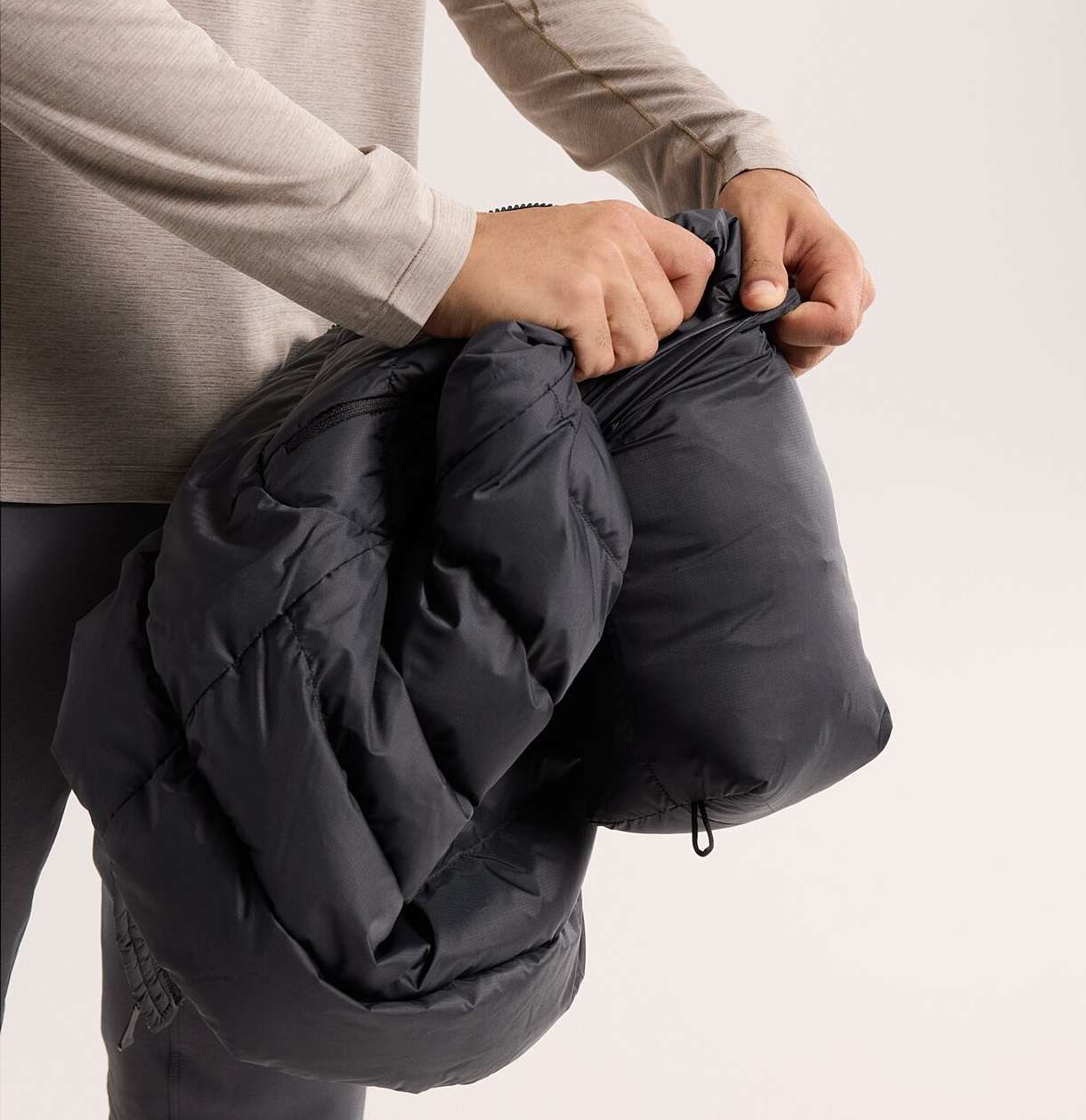
Compressible Down
Down is very compressible

In the case of the down jacket, the presence of a waterproof outer layer is the best solution to be fully protected from precipitation. This can be done very well using the 3-layer system, but a lined jacket where the down filling is protected by a 2-layer laminate is also a great option.

Ethical issues

The use of down is a subject that can cause some commotion. It starts with the idea that down should always be "harvested" from the bird after it has been slaughtered for food or collected after the down has fallen naturally. Live plucking (this is exactly what it sounds like) is a very cruel practice, which many companies are actively fighting against. However, it is a reality that live plucking still exists, as the down from the goose or duck can then be harvested several times. Monitoring has increased significantly, but is still far from perfect.

Down extracted as a by-product of food production is also not necessarily from an ethical source. For instance, several European countries still allow force-feeding of geese. So there is still a long way to go. Fortunately, there are now ways that allow consumers to choose down that does not come from keepers who engage in cruel practices such as live plucking and force-feeding. Down with the Responsible Down Standard quality label (RDS) is always a safe choice. Many brands also have their own labels that guarantee consumers that the down they use comes from ethically responsible sources.

Recycled down

So RDS-certified down is an ethically responsible choice, but it does not completely solve the problem surrounding abuses in the down world. This is because there is only a limited amount of responsible down available on the market. After all, down is overwhelmingly a by-product of food production and thus also completely dependent on the size of that industry. In other words, if the demand for down exceeds what can be supplied as a residual product, the demand for "irresponsible down" (somewhere in the world) will increase. It may not be Twinseasons' brands that will use this down, but down brands with a different strategy may then feel compelled to use it.

Choosing recycled down allows you to respond to this supply/demand issue somewhat. Recycled down is obtained by collecting used down products. These are thoroughly cleaned, dust and impurities are removed and then it can be reprocessed as filling material in jackets and sleeping bags. Incidentally, the origin of the original down is not always guaranteed to be RDS-certified.
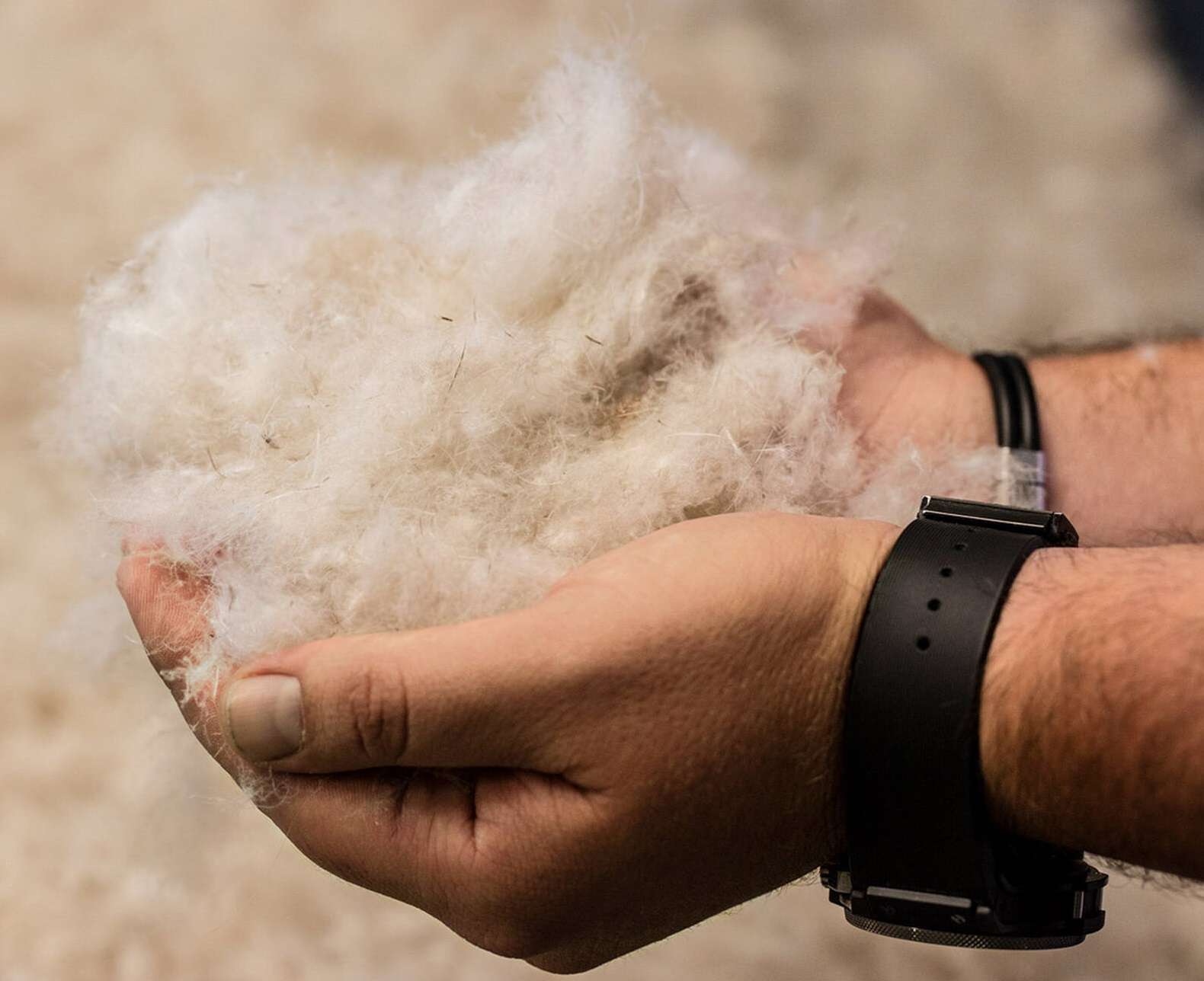
Gerecycled dons
Patagonia uses recycled down, among other things

Maintenance

Down is not a cheap material. Once you own a down product, it is wise to handle it with care. What is the best way to do that? Firstly, you should store down uncompressed as much as possible. Many down sleeping bags come with two storage options: a small storage bag for storing the sleeping bag in your rucksack during your trek and a larger storage bag for storing the sleeping bag at home in the closet. While the latter takes up more space, storing down compressed for long periods of time in a small storage bag can significantly reduce the down's fill power.

Proper cleaning can extend the life of your down product. Dirt and oils from your body can eventually get into the down and cause it to lose its fill. For sleeping bags a sleeping bag liner is a good way to prevent this. These liners are not only comfortable, but also form a thin barrier between you and your sleeping bag, keeping it clean and oil-free. If you do want/need to wash your sleeping bag or down jacket pay close attention to its washing instructions. Manufacturers generally indicate well which (type of) detergents are best to use for this purpose.

Hopefully, with this blog we have been able to explain to you what down is and what its properties are. Would you like to know more about the performance of down compared to other insulation materials? Read our blog where we compare down with synthetic material and wool. Of course, you can also contact us to ask all your questions.

Shopping cart

Clear filters

Filter

&nspb;

Cancel
Confirm